Almost every independent rental agency starts on a spreadsheet, and that is the right way to start. It costs nothing, it does exactly what you tell it, and for six cars and one person it is genuinely better than software.
The problem is that it stops working gradually rather than suddenly. Nobody wakes up to find the spreadsheet broken. It just costs a little more every month, in ways that do not appear anywhere you would look.
The four things a spreadsheet cannot do
Not badly. Cannot.
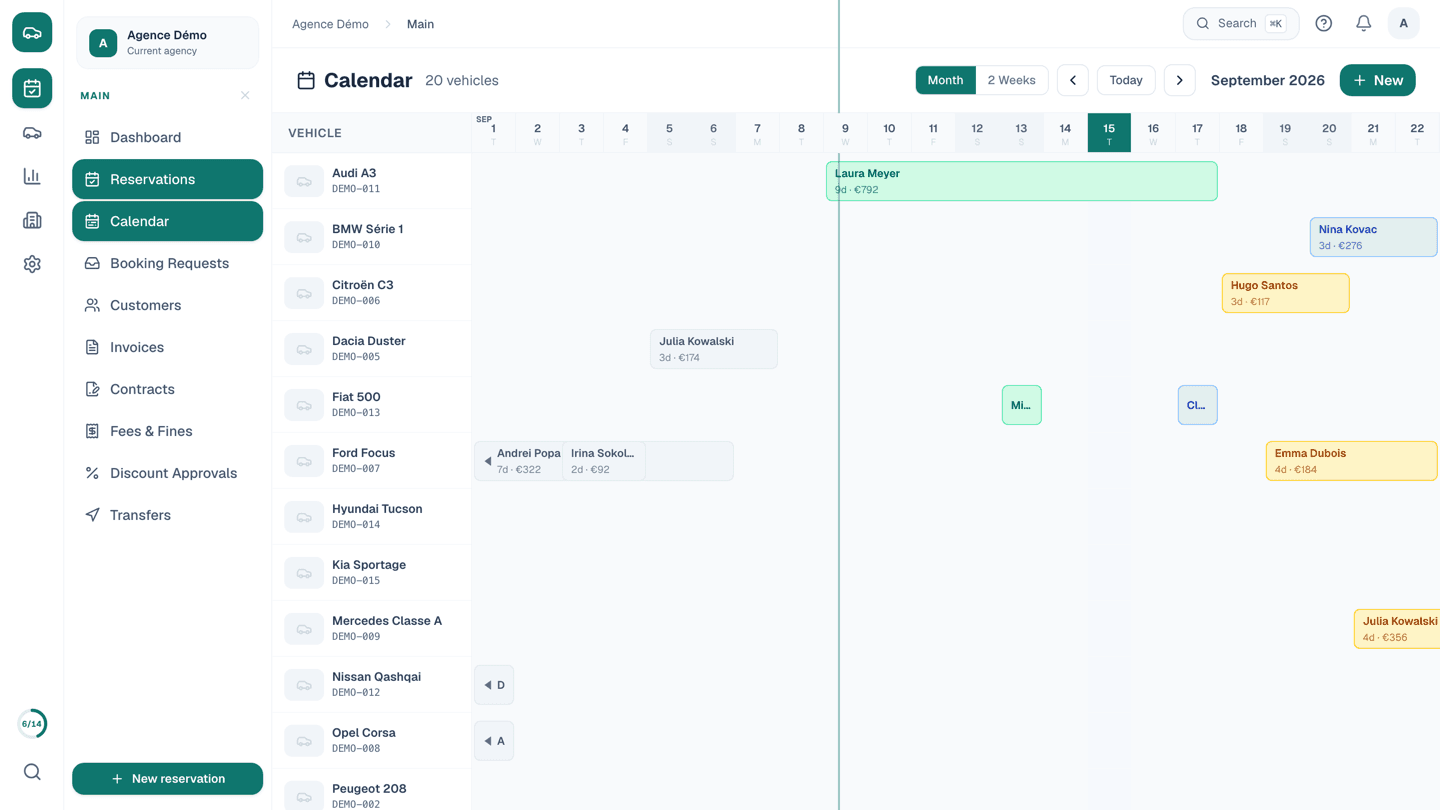
Tell you what is free right now. A calendar of bookings is not availability. Availability is that calendar minus the car in the workshop, minus the one that came back late, minus the one still being cleaned, and it has to be right at the moment somebody is standing in front of you asking. A spreadsheet can show you the first part and none of the rest.
Be one version. The moment a second person needs it, you have a copy on a laptop, a copy in a shared folder and a copy in somebody's email. They will disagree within a week, and the disagreement will be discovered by a customer.
Produce a document. A contract, a signed condition report, an invoice with the right numbering. You can build these by hand, and most agencies do, which is where the hours go and where the mistakes live.
Remember what happened. Who changed the price, when the deposit was returned, what state the car was in eighteen months ago. A spreadsheet holds the current state of things. Disputes are about the past.
The signs you have passed the line
You do not need all of them. Two is usually enough.
- Two people were promised the same car, more than once this year.
- You keep a second, unofficial record: a notebook, a phone photo album, a WhatsApp thread.
- Somebody other than you needs to answer a booking question, and cannot.
- You stopped chasing small charges because finding the rental takes longer than the money is worth.
- You cannot say what your utilisation rate was last month without an afternoon of work.
- A customer asked for a copy of their contract from last year and you had to say you would look.
The last one is the one to take seriously. It is not an efficiency problem, it is an evidence problem, and it is the kind that only shows up when something has already gone wrong.
Clean the data before you move it, not after
The single biggest cause of a bad first month is importing a messy spreadsheet and then working inside the mess.
Spend an evening on three lists before you import anything.
Vehicles. One row per car, with the plate written the same way every time. Decide the format now, because a plate written three ways is three vehicles in any system you move to.
Customers. Merge the duplicates. The same person is usually in there twice, once with a surname typo and once with a different phone number. Whichever system you pick will faithfully preserve both.
Open rentals. These are the ones to enter by hand on the day you switch. There are rarely more than a dozen, and they are the only records where an error is felt immediately.
Everything else, the historical bookings and the old invoices, can stay where it is. You need to be able to read it for a year, not to move it.
What a good first month looks like
Do not try to use everything. Three habits, in this order.
Week one, enter every new booking in the new system only. Keep the spreadsheet open for reference, but stop writing in it. Two sources of truth is worse than either one alone.
Week two, produce every contract and invoice from the system. Even the ones that feel faster by hand. The point is that the record exists, not that this particular contract was quicker.
Week three, look at one number. Utilisation, or revenue for the month. Not because you will act on it in week three, but because it is the first time you will have seen it without doing arithmetic, and that is the moment the change starts paying.
By the end of the month the question answers itself. If you would go back to the spreadsheet, the software was wrong for you. Almost nobody goes back.
Read next
If you are comparing options, the named figures are in six platforms and what they actually charge, and the test that settles it is in how to choose car rental software.
Questions people ask
Can I run a car rental business with Excel?
Yes, and for about six vehicles with one person handling everything it is often the sensible choice. It stops working when a second person needs the same information, when you need documents produced reliably, or when availability has to be right at the counter rather than approximately right.
How many vehicles before I need car rental software?
The threshold is not a vehicle count, it is the number of things you are holding in your head. Most agencies cross it somewhere between eight and fifteen cars, but a five-car fleet with two staff and online bookings crosses it sooner than a twenty-car fleet run by one person.
What is the risk of moving off a spreadsheet mid-season?
Mainly that you have no capacity to learn something new in your busiest month, so the first mistake convinces everyone the new system does not work. Move in a quiet month, run both for two weeks, and enter your open contracts by hand.
Will I lose my history if I switch?
Not if you keep the spreadsheet. You need old bookings readable, not migrated. Export what you have to a plain file, store it somewhere you will find it, and only import vehicles, customers and open rentals into the new system.